
If you are wondering what to do when you disagree with career test results, do not ignore the report—and do not obey it blindly. Treat the result as a hypothesis. First check how you answered, then check what the assessment actually measured, and finally compare the pattern with evidence from your real activities. If the result still does not fit, keep the useful parts, reject unsupported conclusions, and run a small career experiment before making a major decision.
Quick answer: A career test is a structured source of clues, not a final verdict. Disagreement is a reason to review the evidence, not proof that you failed the test or that the test controls your future.
Why career-test disagreement feels so difficult
A career result can sound more certain than it really is. A label, percentage, or list of occupations may feel like an expert has defined you in a few minutes. When the recommendations conflict with your self-image, family expectations, experience, or goals, it is natural to feel defensive.
The real problem is that several different disagreements can look identical. You may dislike a suggested occupation even though the underlying interest pattern is accurate. You may have answered while tired or rushed. The assessment may emphasize interests while you care more about income, training time, location, or stability. Or your daily experience may provide genuine counterevidence that the result missed.
That is why the best response is neither acceptance nor rejection. It is a review.
What to do when you disagree with career test results: review three kinds of evidence
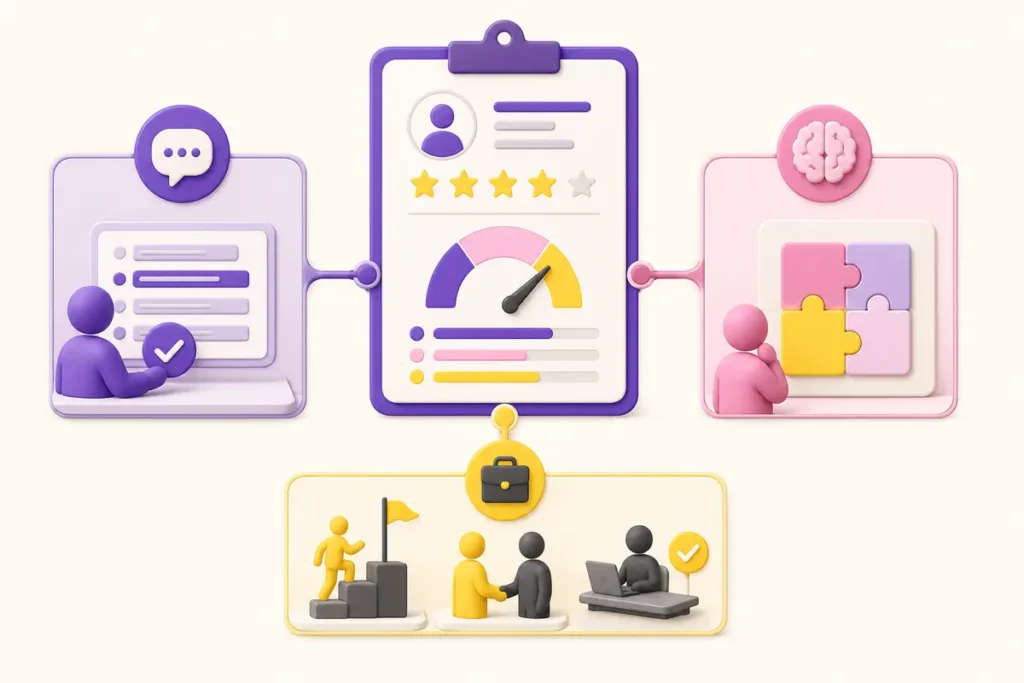
1. Check response quality
Start with the conditions under which you completed the assessment. Were you distracted, trying to finish quickly, answering as the person you want to become, or choosing options that would please someone else? Did you use the middle response whenever you felt uncertain? Even a well-designed assessment depends on the information you provide.
Look back at any questions you remember strongly. Mark the ones that felt ambiguous, depended on experience you have never had, or forced a choice between two imperfect options. If several answers feel unreliable, retaking the assessment later and in calmer conditions may be useful. Do not retake it repeatedly just to obtain your preferred result.
2. Check the interpretation
Next, identify what the assessment actually measured. Career tools may focus on interests, skills, values, personality tendencies, work styles, or some combination. A high interest in Investigative work, for example, does not command you to become a scientist. It suggests you may enjoy activities involving inquiry, analysis, and research. Those activities appear in many occupations.
O*NET describes career-interest types as broad kinds of work people enjoy, then connects those patterns to many occupations. This is a useful reminder that an interest result is broader than a single job title. Read the report’s definitions and methodology before reacting only to the suggested careers.
Also separate “This job appeared on my list” from “The report says this is my only suitable job.” Most responsible assessments provide options to explore, not guarantees of success or satisfaction.
3. Compare the result with real-world counterevidence
Your strongest evidence comes from repeated behavior in realistic settings. Think about projects, classes, volunteer work, hobbies, internships, paid work, and responsibilities at home. Which tasks give you energy? Which ones do you finish well without constant pressure? Which frustrations are tolerable because the work still feels worthwhile?
One unpleasant class is weak counterevidence; poor teaching, stress, or lack of preparation may be the real cause. A repeated pattern across several contexts is stronger. Likewise, enjoying a topic online is weaker evidence than enjoying the actual tasks involved in it.
Evidence rule: Prefer repeated behavior over a single mood, and prefer real tasks over imagined job titles. The goal is not to “beat” the assessment. It is to build a more accurate picture of yourself.
Use this disputed-results review worksheet
Copy the table into your notes and answer each row in plain language. Be specific. “It feels wrong” is a starting reaction; “I have completed three research projects and consistently disliked searching, comparing sources, and writing findings” is usable evidence.
| Review question | What to record | What it may mean |
|---|---|---|
| Were my answers honest? | Items answered for approval, status, or an “ideal self” | Response quality may be distorting the pattern |
| Did I understand the items? | Questions that felt vague, unfamiliar, or culturally unclear | The score may reflect wording rather than preference |
| What exactly does the result claim? | Interest, strength, work style, value, or occupation match | I may be rejecting an interpretation the test never made |
| Where does real life agree? | Tasks I repeatedly enjoy, finish, and seek out | The result has supporting behavioral evidence |
| Where does real life disagree? | Tasks I avoid, dislike, or perform poorly despite practice | The result needs adjustment or a different explanation |
| What can I test next? | One short task, conversation, class, or shadowing experience | I can replace guessing with fresh evidence |
A realistic example: when the label feels wrong but the pattern helps
Sara takes a career assessment and receives strong Conventional and Enterprising themes. The report suggests operations, administration, sales, and business services. She disagrees because she sees herself as creative and wants to work in design.
Instead of discarding the result, Sara reviews it. She notices that she answered positively to planning events, organizing information, presenting ideas, coordinating people, and persuading an audience. She also has real evidence: she enjoys creating brand concepts, but she is often the person who turns a group’s ideas into a schedule, assigns tasks, and presents the final work.
The occupation list was too narrow for her self-image, but the underlying pattern was not necessarily wrong. It pointed to how she likes to work: combining structure, coordination, and influence. Sara now explores design project management, creative operations, brand strategy, and client-facing design roles—not because a test selected them, but because the revised options connect the assessment with her actual behavior.
Her next step is a two-week experiment. She helps coordinate a small creative project, interviews someone in a design-operations role, and records which tasks feel engaging, draining, or learnable. The test result becomes one input in a better decision.
Notice the shift: Sara did not ask, “Is the test right or wrong?” She asked, “Which part of this result is supported, which part is overinterpreted, and what can I verify next?”
Build a simple evidence score

For each disputed theme or career suggestion, rate four factors from 0 to 2:
- Assessment support: 0 = absent, 1 = mixed, 2 = strong pattern.
- Real-task enjoyment: 0 = usually draining, 1 = context-dependent, 2 = repeatedly engaging.
- Demonstrated ability or learning: 0 = no evidence, 1 = early evidence, 2 = repeated progress.
- Practical fit: 0 = conflicts with major constraints, 1 = uncertain, 2 = workable.
A high total does not prove that you should choose the path. It tells you the option deserves deeper investigation. A low total tells you what is missing: interest, evidence, preparation, or feasibility. This keeps one quiz result from overpowering everything else.
Choose the right next action
Your next move depends on what caused the disagreement:
- If your answers were rushed or inaccurate: retake once under better conditions, then compare patterns rather than chasing an exact score.
- If the definitions were misunderstood: reread the report and translate each theme into activities, not job titles.
- If suggested careers feel too narrow: search for other roles containing the same tasks, values, or work environments.
- If real experience contradicts the result: document the repeated evidence and reduce that recommendation’s weight.
- If you lack experience: run a low-risk experiment before deciding that the result fits or fails.
- If results create serious uncertainty: discuss them with a qualified career counselor who can review the tool, context, and alternatives.
Professional testing standards emphasize appropriate interpretation and use. A score should be considered in relation to the purpose of the assessment and other evidence, not stretched into claims the tool was not designed to make.
When should you reassess?
Set a review date instead of reopening the decision every day. Four to six weeks is usually enough time to complete one or two small experiments. Reassess sooner if you discover that you misunderstood the report or answered carelessly. Reassess later—after a course, internship, project, or job change—if you need meaningful new experience.
At the review, compare your original reaction with what you learned. Did the real tasks strengthen the result, weaken it, or reveal a better interpretation? Record the change and choose one next step. Career clarity usually grows through cycles of hypothesis, experience, and reflection.
Your 30-minute action: Choose one disputed result. Complete the six worksheet questions, identify one real-world test you can finish within two weeks, and put a review date on your calendar.
Use career assessments as clues, not commands
If you want to understand the role of a tool before judging its output, read what a career assessment measures. Results can also shift as your experience and context change, so explore why career-test results change over time. If your report offers an overwhelming list, use this guide to narrow multiple career matches.
When deciding what to do when you disagree with career test results, aim for a better explanation—not a more flattering score. Check the answers, interpret the construct correctly, compare it with repeated behavior, and test the uncertain parts. A useful assessment should help you ask sharper questions and explore realistic options; it should never replace your judgment.
Frequently asked questions
Does disagreeing mean the career test is inaccurate?
Not automatically. The tool may be inaccurate for you, but the disagreement may also come from rushed answers, unclear wording, a narrow occupation list, or confusion between an interest theme and a job recommendation. Review the evidence before deciding.
Should I retake the career test?
Retake it once if your first responses were rushed, dishonest, heavily influenced by mood, or based on misunderstood questions. Avoid repeated attempts to force a preferred result, because that reduces the value of comparison.
What if my parents or counselor trust the result more than I do?
Ask them to review the same worksheet with you. Show specific real-world evidence, clarify what the tool measures, and agree on a small experiment. This turns the conversation from authority versus opinion into a shared evidence review.
Can I ignore career suggestions I dislike?
You can reject any suggestion, but first check whether the job title is the problem while the underlying activities still fit. Keeping the supported theme while expanding the occupation options often produces better alternatives.
Sources and further reading: APA testing standards and O*NET career-interest types.
Leave a Reply